Virginia Cannabis Retail 2026: Where Things Stand
Virginia’s cannabis retail market has been five long years in the making, and as of May 2026, we’re still staring at a “Coming Soon” sign that’s starting to fade in the sun. If you’ve been keeping score, this journey has been a bit of a head-scratcher: we legalized possession back in 2021, spent four years bickering over who gets to sell it, watched three different bills die on a governor’s desk, and then (just when the finish line finally seemed in sight) ended up with the new governor and the General Assembly locked in a disagreement about how to cross it.
That’s the ground we’re standing on. And if you live out past the Richmond suburbs or away from the 495 corridor, this delay matters a whole lot more than the folks in the city might realize.
What Does the 2026 Virginia Cannabis Retail Bill Actually Do?
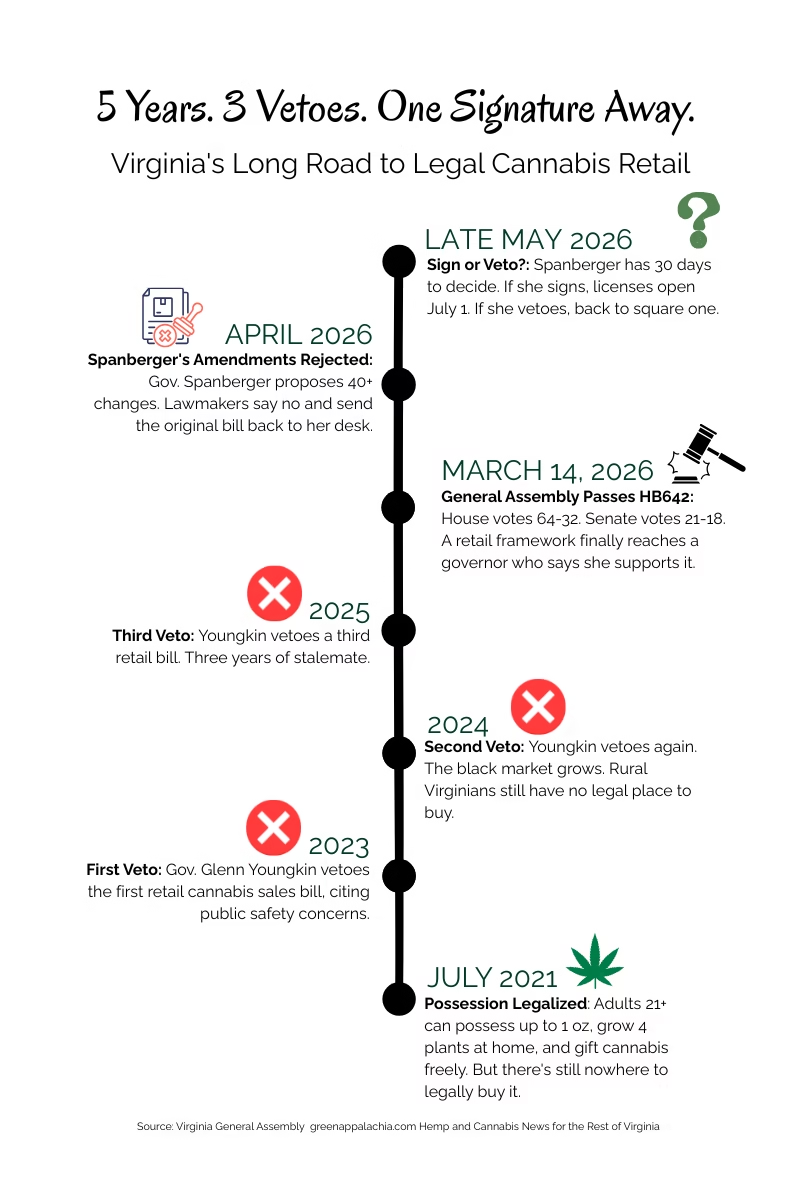
On March 14, 2026, the Virginia General Assembly passed House Bill 642 and Senate Bill 542, establishing a framework for adult-use retail cannabis sales beginning January 1, 2027. The House passed it 64-32; the Senate passed it 21-18, both on largely party-line votes (VPM News). Here’s the meat and potatoes of what the bill actually does.
Doors open January 1, 2027
Adults 21 and older can walk into a licensed retailer and buy cannabis, no medical card required. The possession limit also bumps up from 1 ounce to 2.5 ounces under the new framework.
350 licenses for the whole Commonwealth
The bill caps retail cannabis store licenses at 350 through January 2028. In a state with 95 counties and 38 independent cities, how those get handed out will decide whether rural towns get a slice of the pie, or whether the big markets hog the whole plate.
No opting out
This one is a genuine win for our neck of the woods. Local governments cannot ban recreational cannabis sales within their borders, which keeps us from ending up with a patchwork map where you have to drive two counties over just to find a legal storefront.
The tax man’s share
The state collects a 6% cannabis tax, with localities able to add up to 3.5% on top. Combined with existing sales tax, expect to pay roughly 12 to 16% at the register.
Equity funding built in
Thirty percent of state cannabis tax revenues flow to a Cannabis Equity Reinvestment Fund, which provides grants to businesses owned by people historically targeted by drug enforcement. Another 40% goes to early childhood care and education. Del. Paul Krizek (D-Fairfax), who carried the House bill, projects Virginia will bring in more than $400 million in annual cannabis tax revenue over the first five years (VPM News).
The pay-to-play fee
Existing medical dispensaries have to fork over $10 million to switch to recreational sales. That’s a steep hill to climb, but it’s designed to keep the big corporate shops from running over the small local start-ups trying to get in the door.
State Sen. Lashrecse Aird (D-Henrico) called the final bill “the hallmark of a good compromise.” In plain terms: nobody got everything they wanted, but everyone got enough to get to work (VPM News).
How Did We Get All the Rules and Nowhere to Shop?
Virginia made cannabis possession legal in July 2021, but never opened the front door to a retail market. For five years now, adults 21 and older have been able to carry up to 1 ounce, grow up to four plants, and give it away as a gift. The one thing they still cannot do is walk into a store and buy it. Governor Youngkin sent retail bills to the shredder three years running, in 2023, 2024, and 2025, citing public safety each time (Virginia NORML, 2025 legislative recap).
The result is one of the stranger legal tangles in the country. You can have it. You can grow it. You can give it away. But you can’t buy it, and you couldn’t for half a decade.
That vacuum hasn’t stayed empty. As we’ve covered previously, Virginia’s illicit market is estimated to be five times larger than our legal medical sales, with upward of $1 billion in revenue flowing through back alleys instead of licensed local businesses (Cardinal News). Since there’s no oversight on that stuff, independent tests show about 40% of unregulated cannabis in Virginia is hitching a ride with mold or heavy metals, and 92% of samples test positive for pesticide contamination.
Meanwhile, rural Virginians have been stuck driving long distances to out-of-state-owned medical dispensaries (RISE shops in Salem, Abingdon, Lynchburg, Christiansburg, and Danville), provided they can jump through the hoops of getting a medical card. That’s the backdrop for everything happening in 2026.
Why Are We Still Stuck in Limbo?
The bill landed on Governor Spanberger’s desk, and she wasn’t quite ready to sign it as written. She proposed more than 40 changes that lawmakers rejected entirely in late April 2026, sending the original bill right back to her (Virginia Mercury). The core fight: Spanberger wanted to cut the license cap from 350 down to 200, push the launch date back to summer 2027, and hand large portions of the regulatory framework to the Virginia Cannabis Control Authority to sort out through rulemaking.
Her substitute would also have stripped out the fixed funding percentages for the equity and education funds, handing those decisions to the state budget process instead. That move drew immediate fire from advocates who had spent years locking those provisions into law.
Chelsea Higgs Wise, Executive Director of Marijuana Justice, said the governor’s substitute was “worse for Black, brown and low income communities than the status quo” and accused it of ignoring “the reform, repair and redress required to acknowledge the decades of racist enforcement” (Virginia Mercury).
The General Assembly said no to all 40-plus changes. Del. Krizek didn’t hide his frustration: “I can’t lie and say I’m not frustrated. I am a little bit frustrated, but she is the governor, I’m not the governor. It’s a long process, but good legislation sometimes takes time” (Virginia Mercury).
Spanberger says she’s still at the table: “I will continue to work with the patrons of the bills that are coming back to my desk to make sure that when these bills become law, we get it right” (Virginia Mercury).

What Happens If Spanberger Signs or Vetoes?
Spanberger has 30 days from the General Assembly’s April rejection to make a straight-up call: sign the bill or veto it. That window closes late May 2026. If she signs, license applications open July 1, 2026 (roughly eight weeks from now) and retail sales launch January 1, 2027. If she vetoes, Virginia heads back into the gray zone and the earliest another attempt could succeed is the 2027 legislative session.
If she signs
The Virginia Cannabis Control Authority moves immediately into rulemaking. License applications open July 1. Microbusiness and impact licenses, the ones designed for small operators including USDA-qualified farmers and existing hemp growers, would be among the first out the door. Full retail sales launch January 1, 2027.
If she vetoes
Virginia stays the state where cannabis is legal to have but illegal to buy. The black market keeps winning. Industry stakeholders, equity advocates, and rural communities wait another year, at minimum.
Rodney Holcombe of cannabis logistics company LeafLink summed up the industry mood: “While we are disappointed by delays in establishing an adult-use cannabis market, we remain hopeful that the governor and lawmakers can come together to chart a clear, workable path forward for Virginia” (Virginia Mercury).
What Does This Mean for Those of Us Outside the Golden Crescent?
For communities outside what some call Virginia’s “Golden Crescent” (Northern Virginia, Richmond, and Hampton Roads), the retail framework has some real wins baked in, but also real uncertainties that won’t shake out until licenses actually start getting issued. Here’s what to watch if you’re in our neck of the woods.
The no-opt-out clause is a genuine win
If localities can’t block cannabis retail, Southwest Virginia counties can’t just vote dispensaries out of existence the way some rural counties in other states have. That’s meaningful protection for rural access and one of the best things in the bill for our region.
350 licenses for the whole state is a tight number
With 133 localities in Virginia (cities and counties combined), 350 licenses averages out to fewer than three per locality statewide. The economic reality is that applicants will target higher-population markets first. Roanoke and Charlottesville will see stores before Galax and Floyd.
The microbusiness license is the farmer’s friend
This is the provision rural Virginians need to pay closest attention to. The microbusiness license allows small-scale operators, including our hemp farmers, to grow, process, and sell their own product directly to consumers, with cultivation up to 3,500 square feet indoors. It’s the best way to keep the money in the community rather than sending it to a corporate office in another state. Watch this space closely as the Cannabis Control Authority releases the rulemaking details.
The clock is already running
If the Governor signs, you’ve only got until July 1 to get your paperwork, your lawyers, and your finances in order. This isn’t something you can scribble on a napkin the night before. Start now.
Frequently Asked Questions About Virginia Cannabis Retail 2026
When can I legally buy recreational cannabis in Virginia? If Governor Spanberger signs HB642/SB542 into law, retail cannabis sales to adults 21 and older are scheduled to begin January 1, 2027. If she vetoes the bill, there is no retail market timeline; the earliest a new attempt could succeed is the 2027 legislative session.
Can I still grow cannabis at home in Virginia right now? Yes. Virginia law currently allows adults 21 and older to grow up to 4 plants per household for personal use. That remains legal regardless of what happens with the retail bill.
How many cannabis retail licenses will Virginia issue? The bill as passed caps retail cannabis store licenses at 350 statewide through January 2028. Governor Spanberger’s rejected amendments would have cut that to 200. The final number depends on what gets signed into law.
When do Virginia cannabis business license applications open? Under the current framework, license applications are scheduled to open July 1, 2026. This is contingent on the governor signing the bill before that date.
Will my county have a cannabis dispensary? The bill prohibits localities from banning recreational cannabis sales, so counties cannot opt out. However, license availability and market demand will determine when and where stores actually open. Rural areas will likely see fewer early licenses than urban markets.
What is Virginia’s cannabis microbusiness license? A microbusiness license allows a small operator to cultivate cannabis (up to 3,500 square feet indoors), process it, and sell directly to consumers. It is designed to prioritize impact applicants (people from communities historically harmed by drug enforcement), and may include provisions for hemp farmers and USDA-qualified agricultural businesses.
The Bottom Line
Virginia is closer to a real, legal cannabis market than we’ve ever been, yet we’re still waiting on one person to pick up a pen. The General Assembly did their part. Now we wait to see if the Governor decides to do this right, or do this later.
We’ll keep our ear to the ground and let you know the second the ink is dry.
One bud at a time, Virginia. We’re almost there.
Sources: Virginia Mercury: Cannabis Retail in Limbo | VPM News: Retail Bill Passes General Assembly | Cardinal News: What Legal Sales Might Look Like | Virginia NORML: 2025 Legislative Recap
Green Appalachia covers hemp and cannabis news for the parts of Virginia that everybody else forgets about. Sign up for our newsletter to get updates straight to your inbox.